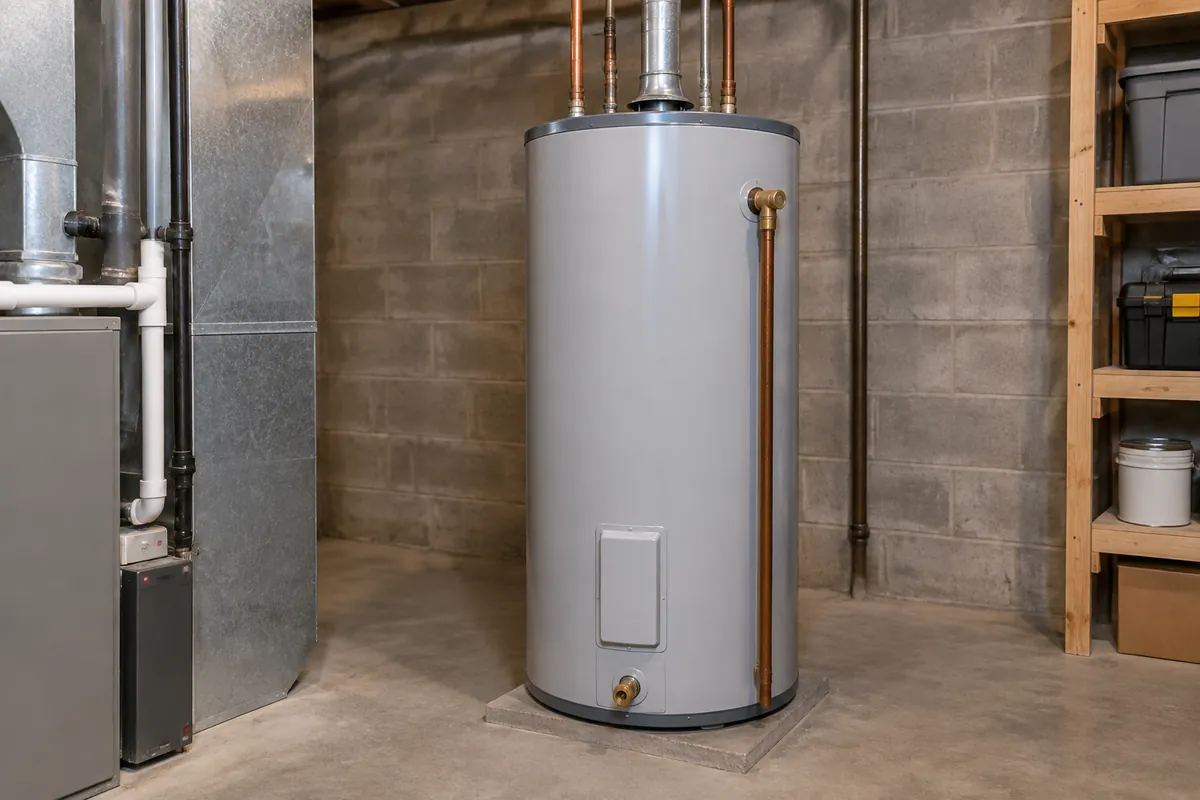
Where the water comes from decides everything
Most water heater calls start with water on the floor. A small drip at a valve or fitting is a repair. Water coming from the body of the tank is not. The steel tank has an inner lining, and once corrosion has opened a seam, the leak spreads and the tank has to be replaced.
| Where the water is | Likely cause | Repair or replace |
|---|---|---|
| Pipe on the side of the tank, or valve at top | Temperature and pressure relief valve discharging, often from high pressure or a worn valve | Repair, but find the cause. A valve that keeps opening is a warning |
| Valve near the bottom | Drain valve seal loose or worn | Repair, usually quick |
| Pipe connections at the top | Loose or corroded fittings or dielectric nipples | Repair |
| Under the tank, no obvious fitting | Tank lining failed or condensation in a high-efficiency gas unit | Often replace. A plumber has to check which |
| Water running from the base jacket | Corroded tank body | Replace |
If water is pooling, shut the cold inlet valve above the tank first, then the gas or power. A tank that has failed can release its full volume, which is often 40 to 50 gallons, in a short time.
No hot water: how a plumber narrows it down
A heater that is silent or lukewarm has a heating problem. The causes are different for gas and electric units, and both are covered below. Several are quick repairs. Some involve gas or high-voltage parts that should not be handled by an owner.
Gas tank water heaters
- The pilot light is out or the flame sensor is dirty, so the burner shuts off. A thermocouple or igniter that has worn out is a common cause.
- The gas control valve is faulty. This is a repair a plumber makes, and it is not an owner job.
- A flue or vent problem has triggered a safety shutdown. This one needs a professional look every time.
- Sediment has built up in the bottom of the tank and covers the burner's heat transfer, which causes rumbling and slow heating.
Electric tank water heaters
- A tripped breaker or a tripped high-limit reset on the unit.
- A failed upper or lower heating element, which causes lukewarm or run-out hot water.
- A bad thermostat that no longer signals the elements.
- Mineral scale coating the elements, which shortens their life.
Safety checks that matter
A gas water heater needs a clear path for exhaust and fresh air. If the room smells of gas, leave the building and call 911 or your gas utility from outside. Do not light anything, flip switches or use a phone indoors. A smell of rotten eggs is the added odorant that utilities put in natural gas.
The temperature and pressure relief valve is a safeguard built into every tank. It opens when the tank gets too hot or the pressure too high, and a discharge pipe carries the water away. Never cap or plug that pipe. If water drips from it regularly, a plumber should look at the cause, often thermal expansion or high supply pressure.
Scalding is a risk with any tank. A common recommendation is to set the thermostat near 120 degrees Fahrenheit, which is hot enough for most uses and lowers the burn risk for children and older adults.
Repair or replace: age and condition
Many tank water heaters last about ten years, according to cost guides from home service providers. Past that point, repairs buy less. A heater older than about ten years that needs a gas valve or a major part is often a better candidate for water heater replacement than for another repair.
Replacement is also the answer for a failed tank, repeated heating element failures, heavy corrosion or a leak from the body. If your family is growing or your hot water runs out too fast, a replacement is an opportunity to resize, or to look at tankless water heater service.
- Under about eight years old with a single failed part: repair is usually reasonable.
- Around ten years old or more with a major failure: ask for the replacement quote before committing to a repair.
- Any leak from the tank body: replace.
- Frequent T and P valve discharge: find the cause before deciding.
Sediment, hard water and basement heaters in Reading homes
Many homes put the water heater in the basement. A basement location raises two issues. A leak can sit unnoticed behind stored boxes until the floor is wet, and a basement that takes on water in heavy rain can flood a heater's burner or controls. A drip pan with a drain, and a heater set on a raised platform, limit both.
Sediment settles in the bottom of any tank. It is mineral scale from the water, and the more mineral the water carries, the faster it builds. Flushing the tank once a year removes part of it. Your water supplier publishes an annual water quality report, so check it for your water's hardness before deciding whether a softener makes sense. See water softener installation and repair.
What affects the cost
- The failed part and whether it is in stock, such as a thermocouple, element, thermostat, valve or anode rod.
- Gas or electric, since gas controls and venting add steps.
- Access to the heater, including basement stairs and clearances.
- Local code items such as a new T and P discharge pipe or a drain pan.
- The time of day, since night and holiday calls may be priced differently.
The plumber diagnoses the unit and explains the repair and replacement options before work starts. Water damage from a sudden tank failure is often covered by homeowners policies, though the tank itself is not. Read your policy wording or ask your insurer.
After a flood from the heater
A tank that releases its contents can soak flooring and drywall in minutes. Dry the area quickly and photograph the damage. If drywall or flooring is wet, see water damage restoration. If the heater sat in a basement that also took on groundwater, a sump pump check belongs on the list.
Whether you live in the city of Reading or in Wyomissing, the steps are the same: shut off the supply, shut off the fuel, dry out and call.