The water type decides what happens next
Restoration professionals sort water by how contaminated it is. The category determines what can be dried in place and what must be removed. It also decides how fast you need to act.
| Category | Typical source | What it means |
|---|---|---|
| Category 1, clean | A supply line, a faucet, a failed hose, rain through a roof | Safest to dry, but it can degrade to Category 2 within a day or two |
| Category 2, gray | A washing machine or dishwasher overflow, a toilet overflow with urine only | Contains contaminants, porous materials are often removed |
| Category 3, black | Sewage, river or creek flooding, standing water for days | Highly contaminated, porous materials are removed and the area is disinfected |
These categories come from the IICRC S500, the standard professional restorers work to. A sewage backup or flood water from outside is never treated as clean water, whatever it looks like.
What restoration involves
Assessment
The crew finds how far the water has spread, including behind baseboards and under flooring, using moisture meters and sometimes thermal cameras.
Extraction
Standing water is pumped or vacuumed out. This is the step that most reduces drying time.
Removal
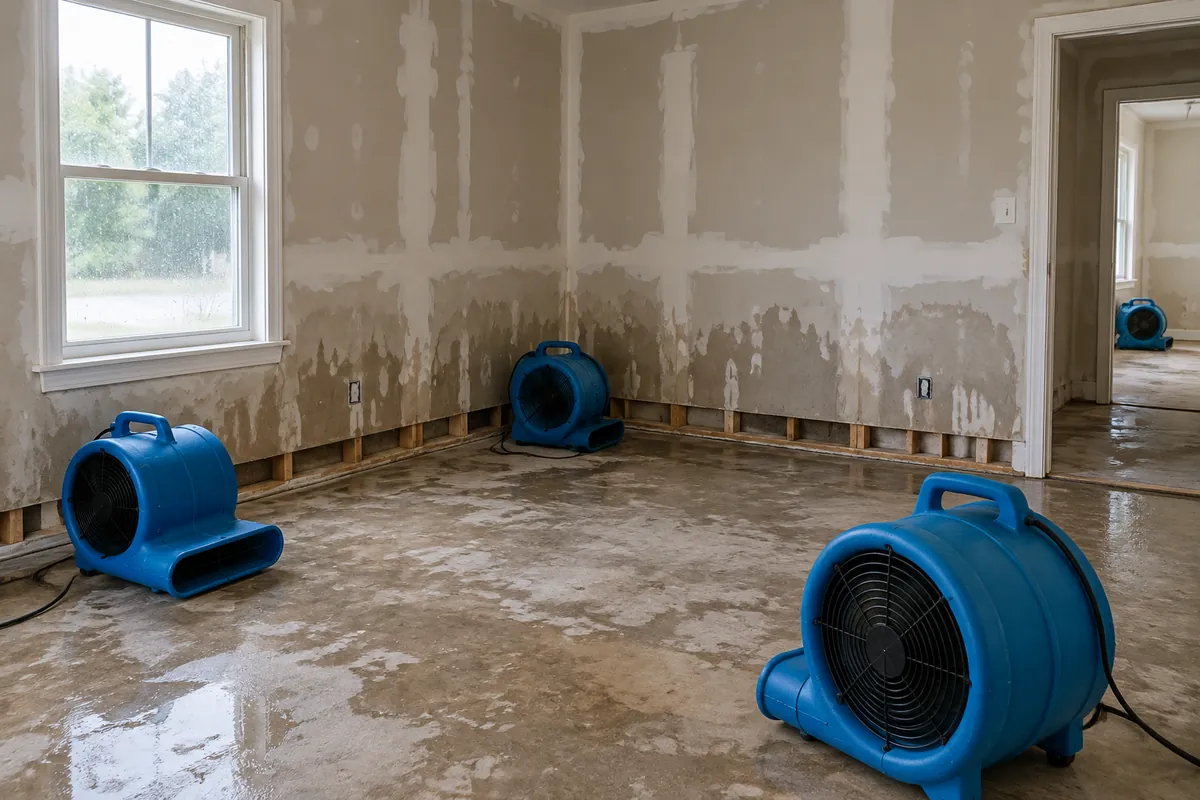
Soaked carpet pad, wet insulation and drywall that cannot dry are cut out. Carpet and hardwood may be saved or not, depending on the water type.
Drying
Air movers and dehumidifiers run for several days. Moisture readings are taken daily until the materials are back to normal.
Cleaning and repair
Surfaces are cleaned and treated, and then drywall, flooring and paint are rebuilt.
The EPA advises drying water-damaged areas within 24 to 48 hours to prevent mold growth. That is why quick extraction and drying matter more than a perfect cleanup later.
Common causes in Reading homes
- A burst or leaking supply line, often after a freeze. See burst pipe repair and frozen pipe repair.
- Sewer or drain backup through a basement floor drain. See sewer line repair and drain cleaning.
- A water heater tank that failed. See water heater replacement.
- A sump pump that quit during heavy rain. See sump pumps.
- Seepage from rain and a high water table in below-grade basements.
Reading sits beside the Schuylkill River and has many basements. Heavy rain finds those basements first. Fixing the source of the water is as important as drying the room, or the damage comes back.
Plumbing first, restoration second
A plumber stops the leak and repairs the pipe. Water damage specialists answer the dedicated line on this page and can talk you through extraction and drying. If a pipe is still leaking, say so on the call, because drying is pointless until the source is stopped.
If a pipe is still leaking, drying is pointless. Close the main shutoff before anything else, and then call.
Insurance and records
Homeowners policies often cover sudden water damage, such as a burst pipe, but usually not damage from long-term seepage or neglect. Sewer backup is commonly excluded unless a specific endorsement was added, so check your policy.
Photographs of the source, the damage and your belongings help any claim. Keep damaged materials until an adjuster says otherwise. Ask your insurer before major repairs begin.
What to keep and what to throw out
Not everything wet is ruined. Hard, non-porous items such as glass, metal and sealed tile can be cleaned and kept. Porous items soaked by clean water, such as carpet and padding, are often saved if dried quickly. The same items soaked by sewage or flood water are generally discarded.
Keep a list of anything you throw away, with photographs, before it leaves the house. An adjuster can use that list, and it protects you if a claim is questioned later.
| Material | Clean water, dried fast | Sewage or flood water |
|---|---|---|
| Carpet pad | Often replaced, since it holds water | Discard |
| Carpet | Frequently dried and kept | Usually discard |
| Drywall | Dry if only wet at the bottom, cut out if saturated | Cut out |
| Hardwood | Sometimes dried, but may cup | Often removed |
| Sealed tile and concrete | Dry and clean | Clean and disinfect |