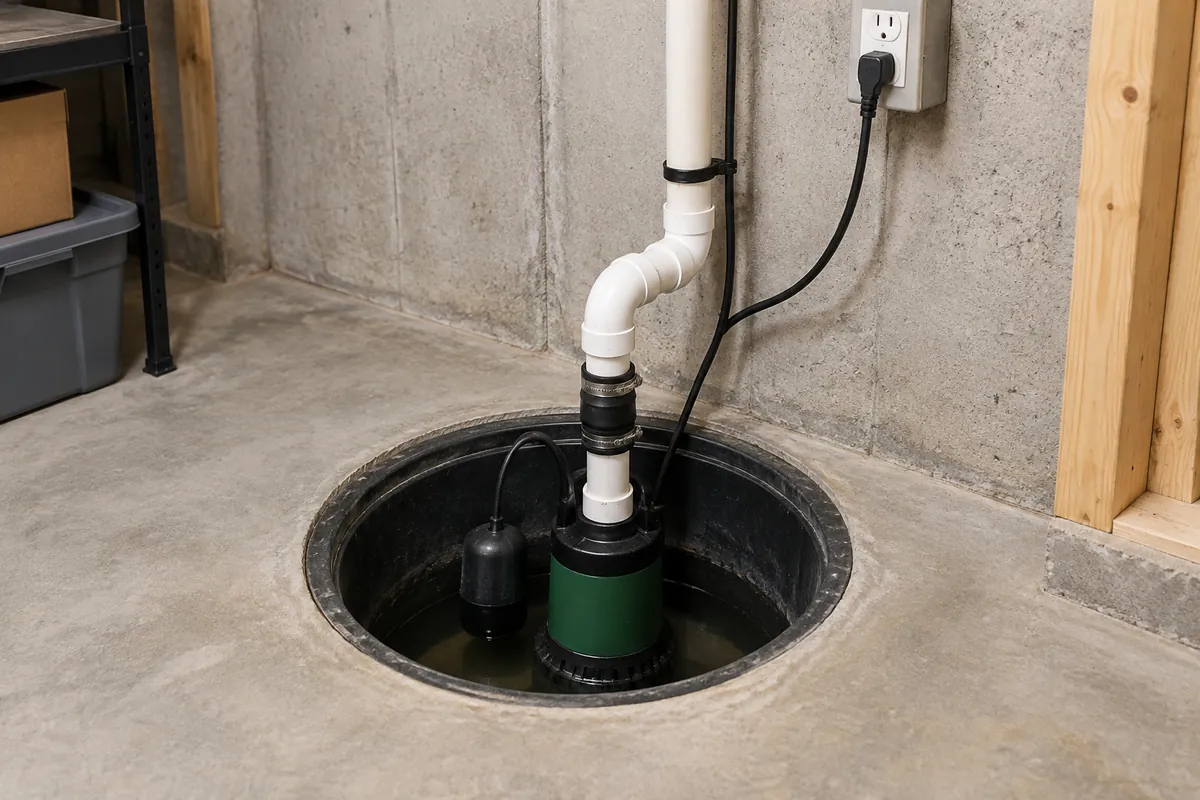
How a sump pump works
A sump pump sits in a pit in the basement floor. When water fills the pit, a float rises and switches the pump on. The pump pushes water out through a pipe to the outside, away from the foundation.
It runs most when you need it most, which means during storms, and that is also when the power can fail.
Why they fail
| Cause | What it looks like |
|---|---|
| Power outage | The pump stops during the storm that fills the pit |
| Stuck float | The pump never turns on, or never turns off |
| Clogged intake | The motor runs, but little water moves |
| Worn motor | A unit that is many years old and loud, or tripping the breaker |
| Failed check valve | Water falls back into the pit after each cycle and the pump cycles often |
| Undersized pump | It runs constantly in heavy rain and still falls behind |
A battery backup adds protection against power loss. A water-powered backup works without electricity, if the house has municipal water pressure.
Why basements in Reading take on water
Reading sits beside the Schuylkill River, and the city has crested well above flood stage in the past, including 31.3 feet in June 1972 against a flood stage of 15.5 feet.
Older foundations may also have no interior drain at all. Water that cannot get out seeps through the floor and walls, and a pump alone may not be enough.
Waterproofing: what is plumbing and what is not
Some basement water problems are plumbing problems and some are drainage and grading problems. A plumber can install an interior drain and pump, repair a failed discharge line and fix a leaking pipe that looks like seepage. Regrading a yard or repairing a foundation crack is a different trade.
The first step is to find where the water comes from. A leak from a supply line is a leak detection issue, and a backed-up floor drain is a drain issue. If the basement has already flooded, see water damage restoration.
- Interior drain tile and a sump pit to collect water at the floor edge.
- A pump sized for the pit, with a check valve on the discharge.
- A discharge pipe that carries water well away from the foundation.
- A backup pump or battery for outages.
Testing and upkeep
Pour a bucket of water into the pit before the wet season and make sure the pump starts, empties it and shuts off. Clean the pit of silt and debris once a year. Replace a pump that is old, noisy or running constantly.
What to ask before a new pump goes in
- How large is the pit, and is it lined and sealed?
- Is the discharge pipe sloped away from the house, and where does it end?
- Is there a check valve, and is it accessible?
- What happens when the power goes out?
- Is the pump on its own circuit?
A pump is only as good as the pit and discharge around it. An expensive pump on a blocked discharge pipe still leaves a wet basement.