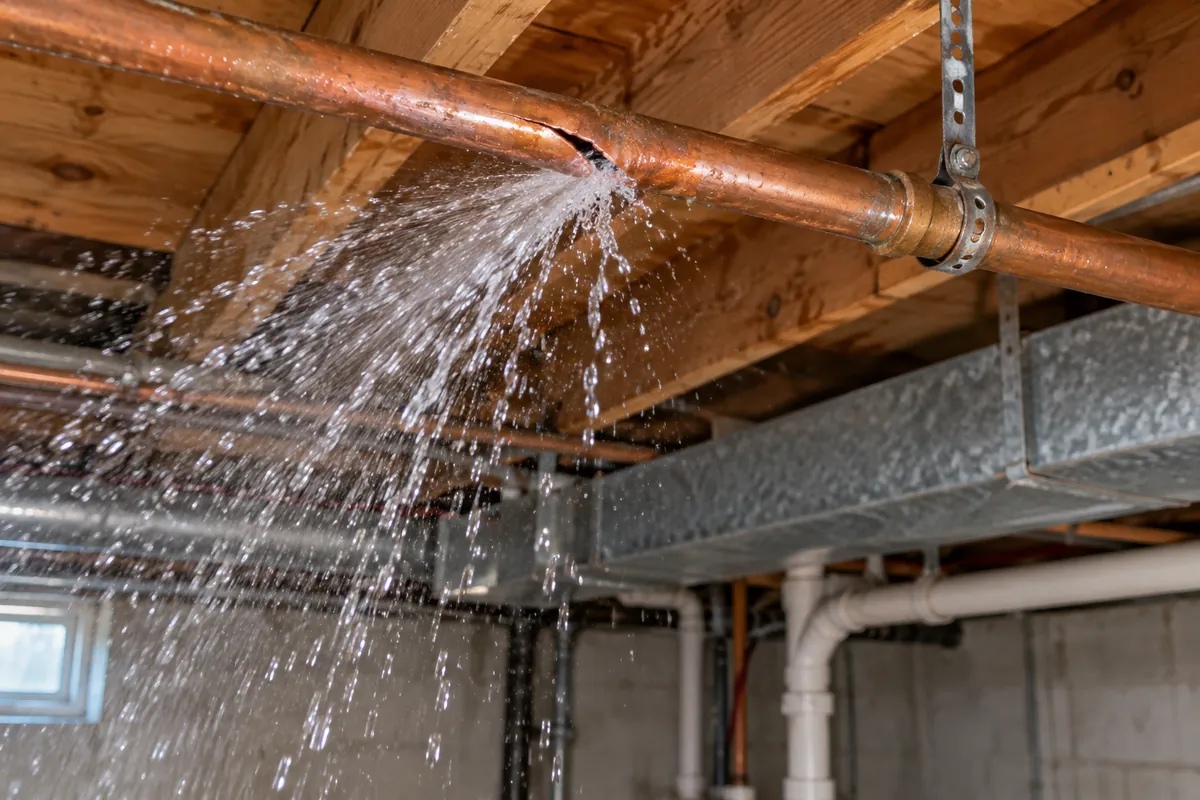
Do these in order
Close the main
Turn the main shutoff fully off. It is often on a basement wall near where the water line enters the house.
Drain the lines
Open the lowest tap and a high one so the remaining water drains out.
Protect the electrical system
Keep away from water near outlets or the panel. Cut the power only from a dry spot you can reach safely.
Record the damage
Take photographs and short video before moving anything.
Call a plumber
Say where the water came from and whether the room is above a finished space.
Why pipes burst
Freezing is the best known cause. Water expands when it freezes, and the pressure builds between the ice plug and the closed faucet, not at the ice itself. The split often shows up on thaw, when water starts moving again.
Pipes also fail from corrosion, from high water pressure and from joints that were poorly made years ago. In an older home, a failure in one spot often suggests the rest of the line is similar.
What the repair involves
A plumber locates the split and cuts out the damaged section. A new piece is joined with fittings that suit the pipe, whether copper, PEX, galvanized or plastic. Water is turned back on slowly and the repair is checked for leaks.
If the pipe is corroded or has frozen before, the plumber may recommend replacing more than the split. A repair that leaves weak pipe behind may only move the failure down the line.
After the leak is stopped
Stopping the water is half the job. Wet drywall, insulation and flooring need to dry quickly to avoid mold. See water damage restoration for how drying works.
If the pipe froze, find out why. A gap in insulation, an open crawlspace vent or a cold exterior wall will do it again. See frozen pipe repair for prevention.
Cost and insurance
- Where the pipe is. A split in an open basement ceiling costs less than one inside a finished wall.
- How much pipe has to be replaced.
- Materials and fittings.
- Whether walls and floors have to be opened and repaired afterward.
Insurance often covers sudden pipe bursts and the damage they cause. It usually does not pay to repair a pipe that failed from age. Ask your insurer before the repair so the records are in order.
What to tell the plumber on the call
- Whether the water is still running, and whether you closed the main.
- Which floor the water came from, and whether a finished ceiling is below it.
- The pipe material if you can see it, such as copper, plastic or galvanized.
- Whether the house was cold or empty before it happened.
- Whether any water reached outlets, appliances or the electrical panel.
Those details let the plumber bring the right fittings on the first trip. A split in a copper line needs different parts than a failed joint in plastic or a corroded galvanized run.