What cold does to a pipe
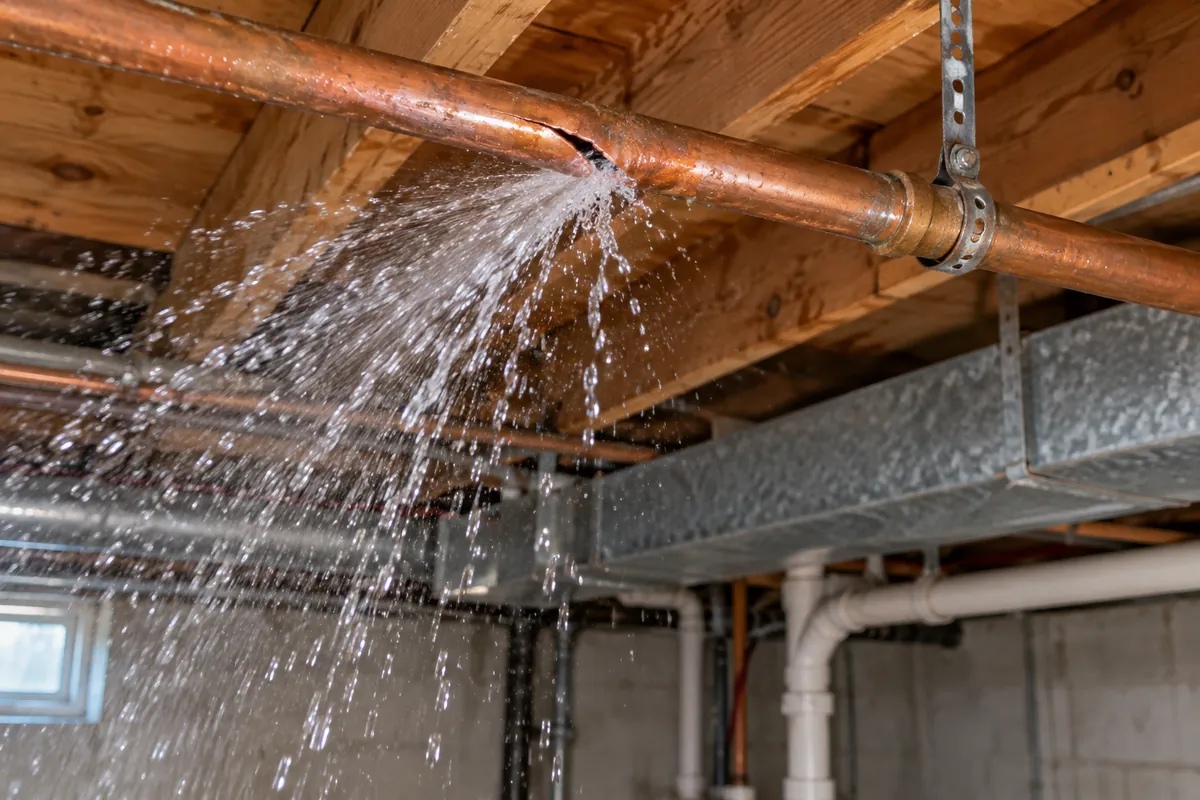
Water expands as it freezes. In a closed pipe, the ice forms a plug and pressure builds between the plug and a closed faucet. The pipe often splits where the pressure is highest, not where the ice sits.
That is why a pipe can freeze without bursting and then burst when it thaws. The split was already there. The thaw let water move again.
Reading's winters
January in Reading averages a high near 38 degrees and a low near 23, with about 25 inches of snow in a typical year. Individual nights go much lower. Pipes in unheated garages, crawlspaces, exterior walls and basements with drafty windows freeze first.
An exterior wall with little insulation is a frequent place for a repeat freeze.
Thawing a pipe, step by step
Open the faucet
Leave it open so water can flow as the ice melts and pressure is relieved.
Find the frozen section
Look for frost, a cold spot or a pipe that is bulging.
Apply gentle heat
Use a hair dryer, a heating pad or warm towels, starting near the faucet and working toward the frozen part.
Watch for leaks
As water starts to flow, check the length of the pipe for drips. A split can reveal itself only now.
Keep the tap running
Let a thin stream run until pressure is normal.
Keep hair dryers and other electric heaters away from any standing water. The list under "What not to do" covers open flames.
When to stop and call
- The pipe is cracked, bulging or leaking.
- You cannot find the frozen section.
- The pipe is in a finished wall or ceiling.
- An hour of gentle heat has not opened the flow.
- More than one pipe or fixture is frozen.
If a pipe has split, close the main shutoff right away. See burst pipe repair for the steps. If water has soaked floors or walls, see water damage restoration.
Prevention before the next cold snap
| Where | What to do |
|---|---|
| Crawlspaces and garages | Insulate supply lines and seal drafts |
| Exterior walls | Open cabinet doors under sinks so warm air reaches the pipes |
| Outdoor spigots | Disconnect hoses and shut off the indoor valve if there is one |
| Unused rooms | Keep some heat on, even in a room you do not use |
| Hard freezes | Let a faucet drip slowly on the coldest nights |
If the same pipe freezes twice, ask a plumber about rerouting or insulating the wall cavity. See frozen pipe repair for what that involves.
Why the same pipes keep freezing
A pipe that freezes once is likely to freeze again in the same spot. The cause is usually structural. A pipe may run through an uninsulated wall cavity, a gap may let cold air in around a penetration, or a supply line may sit close to a vent or a crawlspace opening.
Fixing the pipe without fixing the cause only resets the clock. A plumber can look at the route and suggest insulation, rerouting or heat cable for a vulnerable stretch.
What not to do
- Do not use a torch, a propane heater or any open flame.
- Do not pour boiling water over a pipe, since rapid heating can crack it.
- Do not leave a heater unattended near a pipe.
- Keep hair dryers, heaters and extension cords away from standing water, and stay out of any wet area where outlets are close to the floor.
- Do not ignore a frozen pipe on the theory that it will thaw on its own.
- Do not hammer or pry at a frozen pipe.
Slow, gentle heat is always the right approach. If a pipe is behind a wall, call a plumber rather than opening it yourself.
After the thaw
Once water is flowing, check every faucet, including the ones that were not frozen. Look at the basement ceiling and the walls below the frozen section for drips or dark spots. A slow leak that shows up a day later is common.
Watch the water meter if you can. If it moves with everything off, a pipe has split somewhere. See leak detection for how to confirm and find the leak.
Heat tape, insulation and other fixes
Foam pipe sleeves are inexpensive and work well on exposed runs in basements and crawlspaces. They slow heat loss and do not need power. Heat cable wraps around a pipe and warms it when the temperature drops. Use only cable made for pipes and follow the manufacturer's instructions, since misuse is a fire risk.
For pipes inside exterior walls, the better fix is often to add insulation on the cold side of the pipe or to reroute the line. That is a plumbing and carpentry job, and a plumber can tell you what is practical in your house.
If you will be away
An empty house in a cold snap is risky. Keep the heat at a safe setting, ask a neighbor to check, and consider shutting off the main and draining the lines if you will be gone a long time. A plumber can explain how to drain the system for your house.
Know where the main shutoff is before you leave. It is the single most useful thing to know in any water emergency.