The two-hour meter test
The EPA describes a simple check. Use no water for two hours, read the meter before and after and compare. If the reading changed, there is a leak. Many meters also have a small leak indicator that spins when any water moves.
Toilets are the most common hidden leak. Drop some food coloring into the tank, then wait about ten minutes without flushing. If color shows in the bowl, the flapper is leaking. If the meter moves with the main shutoff closed at the house, the leak is likely between the meter and the house, on the buried line. See water line repair.
The symptoms that look like something else
Leaks do not always produce a puddle. They show up as other problems first, and recognizing the pattern saves time.
| What you see | What it often means |
|---|---|
| Water bill higher with no change in use | A running toilet or a leak in a line you cannot see |
| Warm spot on a floor | A leak in a hot water line under the surface |
| Musty smell with no visible water | Moisture behind a wall or under flooring |
| Paint bubbling or peeling | Water moving through the wall behind it |
| Running water heard in a silent house | A pressurized line leaking inside a wall |
| Low pressure on one side of the house | A leak in a supply line feeding that side |
How a plumber finds a hidden leak
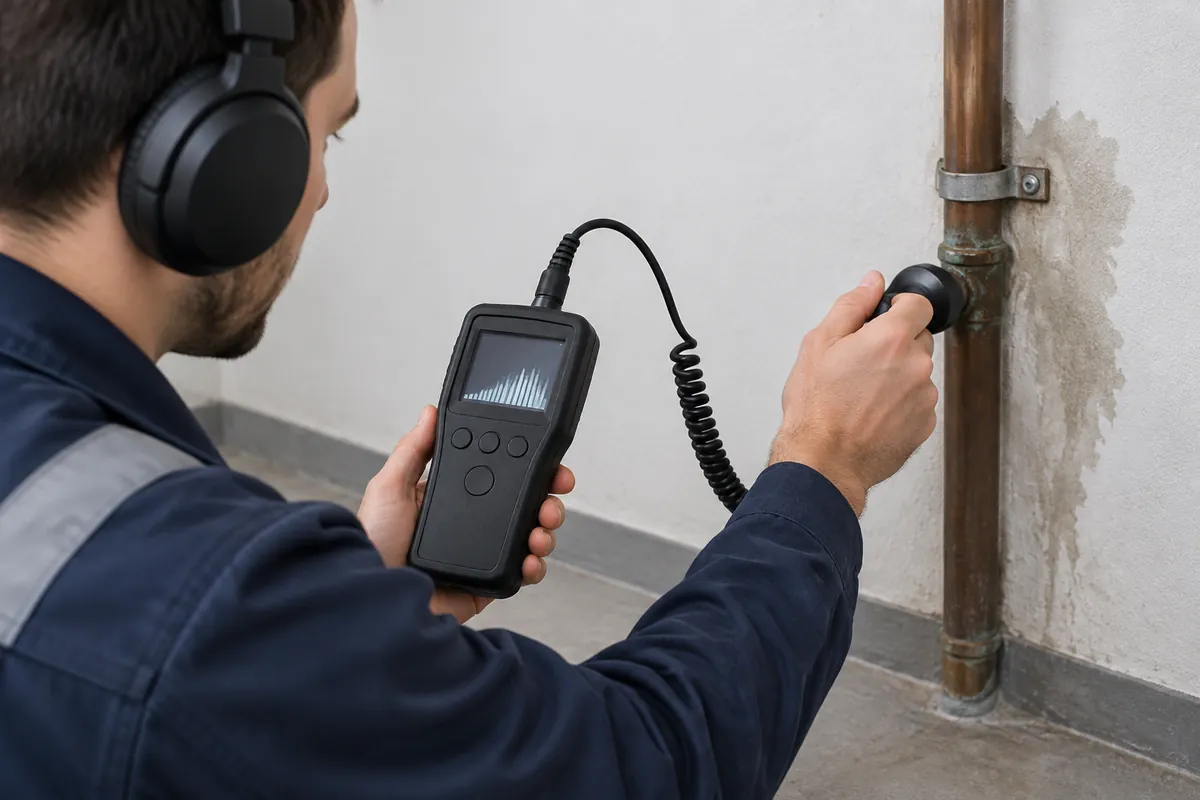
Guessing means opening walls. Detection tools reduce that. A plumber may use acoustic equipment that listens for the sound of escaping water, thermal imaging that shows a temperature difference, pressure testing that isolates lines and tracer gas for hard cases.
Each method narrows the leak to a small area. The wall or floor is then opened in one spot, and not along the whole run.
From symptom to solution
A leak found is a leak that still has to be fixed, and the repair depends on where it is. A pinhole in copper in a wall is a small repair, while a corroded galvanized line may point to a larger problem. In older Reading homes, repeated leaks can be a sign that repiping deserves a look.
A leak in the wall can also mean water has already soaked materials. If so, water damage restoration may follow the repair.
Why a small leak is worth chasing
The EPA reports that the average household loses more than 9,300 gallons a year to leaks, and that about nine percent of homes leak 50 gallons a day or more. A slow leak adds to the water bill and also keeps wood and drywall damp, which invites mold.
Steps to take until the plumber arrives
Find the main
Locate the main shutoff and make sure it turns. A valve that is stuck is worth knowing about before an emergency.
Note the meter
Write down the reading and the time. A second reading later shows how fast water is escaping.
Close suspect valves
Shut off the supply to the toilet, the washer or the water heater one at a time and watch the meter.
Dry what you can
Wipe up standing water and run a fan. Dry materials within a day or two to avoid mold, as the EPA advises.