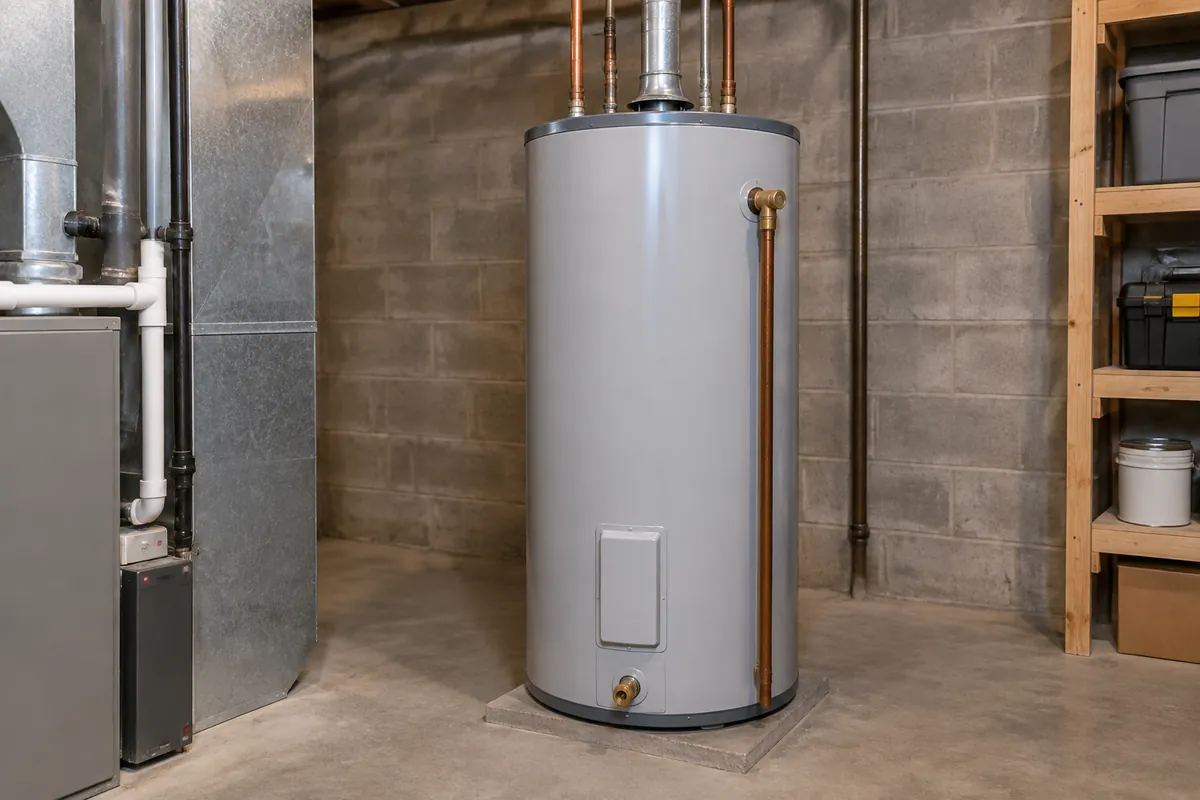
The published numbers
HomeServe's Pennsylvania cost guide, dated September 1, 2025, puts the average replacement at about $1,411 and the average repair at about $374. It cites a typical lifespan of around ten years. Those are averages across many jobs, not a price for any one house.
A figure like this tells you the scale of the decision. It does not tell you what your job costs. A simple swap in an easy location can come in below it. A job that needs new venting, a new gas line or a move can come in well above it.
What moves the price
| Factor | Why it matters |
|---|---|
| Fuel type | Gas and electric units cost differently and need different connections |
| Tank size | A larger tank costs more |
| Venting | Gas units need a safe vent, and old chimneys may need a liner |
| Location | Tight closets, basements with stairs and attics add labor |
| Code updates | Expansion tanks, relief valve piping and new shutoffs may be required |
| Unit type | Tankless units cost more up front |
Repair or replace
A repair makes sense when the problem is a part such as a thermostat, an element, a pilot assembly or a relief valve, and the tank is not near the end of its life. Replacement makes sense when the tank leaks, the heater is old or repairs are adding up.
Ask the plumber to compare the repair cost with the cost of a new unit, especially when the tank is near ten years old. See water heater repair for what can be fixed and water heater replacement for what a swap involves.
How to compare estimates fairly
- Is the tank the same size, brand tier and warranty in each estimate?
- Does each include new shutoff valves, connectors and a relief valve?
- Is venting work included or extra?
- Does the price include removal and disposal of the old tank?
- Is a permit included, if one is required?
- What labor warranty comes with the work?
Two prices that look different may be quoting different jobs. Written line items make it easier to compare.
Gas, electric and what each costs to run
Fuel costs vary with the market, so any figure printed here would go out of date. What stays true is the pattern. Gas heaters heat water faster and often cost less to run where gas is available. Electric heaters are simpler, need no vent and are often easier to install.
The more important number may be the cost of the connection, not the fuel. If the house has gas and a working vent, replacing like with like is usually the lowest-cost route. Switching fuel adds piping, venting or electrical work.
Warranties and what they cover
Tank heaters typically carry a warranty on the tank itself, often in the range of several years, and a shorter one on parts. The plumber's labor warranty is separate and is usually shorter. Read both before you sign.
A longer tank warranty often means a thicker anode or a better lining, and it often costs more. Whether that is worth it depends on how long you plan to stay in the house and how hard your water is. Ask the plumber to explain the difference in plain terms.
Anode rods and maintenance that stretch the life
Every tank has a sacrificial rod, called an anode, that corrodes in place of the tank steel. When it is used up, the tank begins to rust. Checking and replacing the anode can add years to a tank that is otherwise sound.
Flushing the tank once a year removes sediment. Setting the thermostat at a sensible temperature lowers scale and scald risk. Together, these two habits are the cheapest way to avoid an early replacement.
Timing a replacement around your life
The best time to replace a heater is when it still works. You can compare options, schedule a visit and avoid a flooded basement. The worst time is a holiday weekend with a leaking tank and a houseful of guests.
Signs that the end is near include rust at the base, a tank older than ten years, rumbling that does not go away after flushing and a relief valve that drips. Any of these is a reason to start planning.
What a plumber checks before giving a price
A quote made without seeing the heater is a guess. On a visit, a plumber looks at the things that change the work. The vent route and whether a gas unit has enough air to burn safely. The gas line size and shutoff. The condition of the water shutoff valves and the old connectors. The floor drain or pan under the tank. The water pressure, since high pressure shortens the life of a new unit.
Each of those can add or remove labor. A heater in an open basement with good shutoff valves is a simpler job than one in a closet with an old vent that has to be rerouted. That is why two homes with the same tank size can get different written prices, and why the line items matter more than the total.
Ways to keep the cost down
- Replace before the tank fails. A planned job avoids emergency pricing and water damage.
- Keep the same fuel type and location when you can.
- Flush the tank yearly to extend the life of the next unit.
- Ask about the manufacturer's warranty length and what it covers.
- Photograph the tank label and the vent so the plumber can quote more precisely.