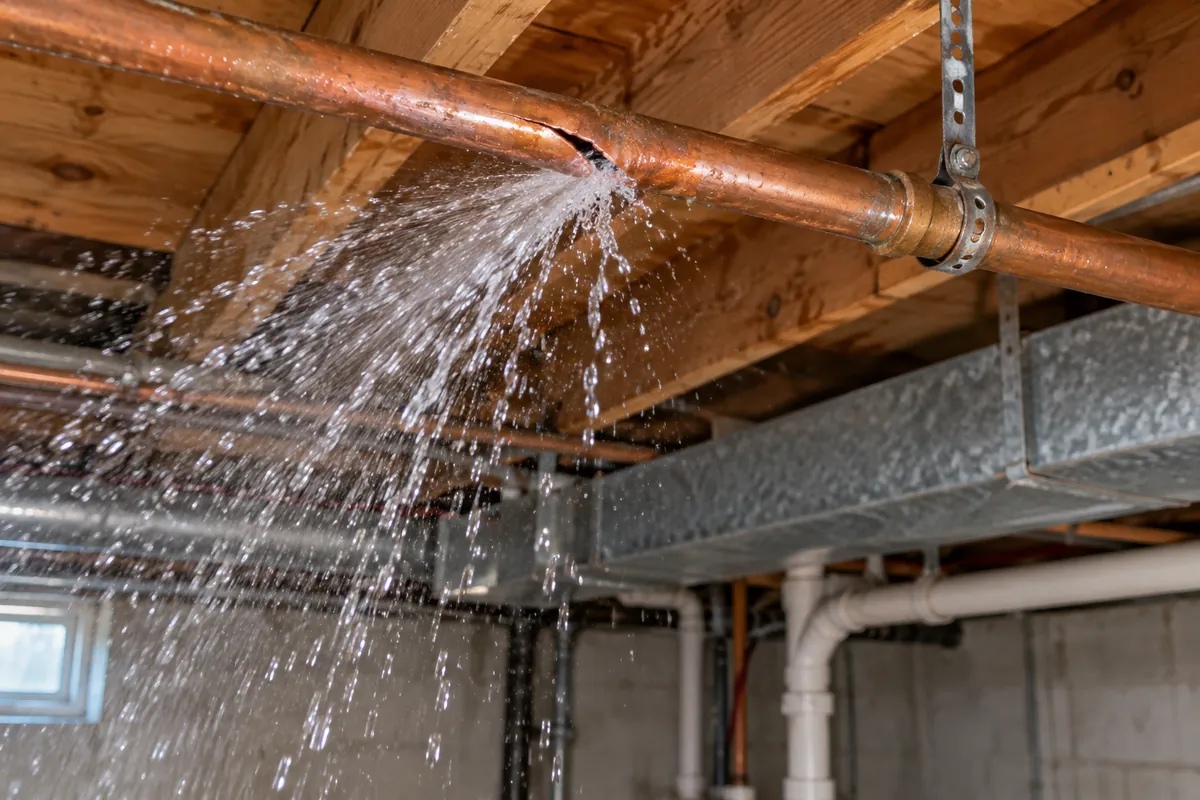
The usual pattern
MoneyGeek describes the typical standard policy this way. It covers water that suddenly escapes a broken or frozen pipe inside the house. It does not cover water that travels the other way, back through drains, sewers or a sump pit. That requires a separate endorsement.
Your own policy is the final word. Wording varies between insurers and between policies, and what is covered can depend on the cause, the timing and what you did afterward. Read the section on water damage before you need it.
What is often covered
- Damage to walls, ceilings and floors from a pipe that suddenly burst.
- Damage to belongings that were soaked.
- In some policies, the cost of tearing out part of a wall to reach the pipe.
- Temporary living costs if a part of the house becomes unusable.
A burst from a freeze is a classic sudden event. Many policies expect the house to have been kept heated, so ask what your policy says about vacant or unheated homes.
What is often not covered
| Situation | Usual treatment |
|---|---|
| A pipe that failed from age, corrosion or wear | The pipe itself is usually not covered, though resulting damage might be |
| A slow leak over weeks or months | Often excluded as gradual damage or neglect |
| Sewer or drain backup | Excluded unless an endorsement was added |
| Outside flood water | A separate flood policy is needed |
| Mold after a delayed response | Often limited or excluded |
The distinction between sudden and gradual is where many claims are decided. A leak that you could have noticed and did not is treated differently from a pipe that split overnight.
Steps that protect a claim
Stop the water
Close the main. Insurers expect you to prevent further damage.
Photograph and video everything
Show the source, the damage and your belongings before moving anything.
Call your insurer early
Ask what they need and whether you can begin emergency repairs.
Keep damaged materials
Do not throw out a section of pipe or soaked items until the adjuster says you can.
Get itemized invoices
Ask the plumber and any drying company for detailed written records.
Dry quickly, in writing
The EPA advises drying water-damaged areas and items within 24 to 48 hours, because in most cases mold will not grow if materials dry in that window. Insurers often expect you to act quickly. Delays that let mold grow can reduce what a policy pays.
Keep a log of when you discovered the damage, who you called and what was done. See water damage restoration for how drying is documented.
Repairing the pipe itself
The repair of the burst section is a plumbing job. A plumber cuts out the damaged piece and replaces it. If the pipe froze, find out why it froze, because the cause affects what repair you need. See burst pipe repair and frozen pipe repair for the steps.
If the pipe is old and corroded, ask whether a larger replacement is wise. A policy may not pay for upgrading the whole system, but it may pay for the damage from a sudden failure.
How adjusters think about sudden versus gradual
An adjuster looks for evidence of timing. A pipe that split overnight in a freeze leaves a clean break, fresh water damage and a clear date. A pipe that has been weeping for months leaves rust staining, soft drywall and mineral deposits that take time to form.
That is why photographs and the plumber's description matter. They help show which category the event falls into. If the plumber notes the pipe split suddenly, ask for that in writing on the invoice.
If you discover an old leak, do not hide it. Describing it honestly and quickly is better than letting an adjuster find evidence you did not mention. Policies often require you to give prompt notice.
Deductibles, limits and small claims
A claim has to clear your deductible before the insurer pays anything. For a small leak that damaged a section of drywall, the repair may cost less than the deductible, and a claim may not be worth filing. Ask the plumber for a repair estimate before you decide.
Claims can also affect future premiums or renewals. That is a reason to understand the numbers first, not a reason to avoid filing a large claim. A burst pipe that soaked a finished basement can easily exceed a typical deductible.
- Find your deductible and whether water damage has a separate one.
- Compare the repair estimate with the deductible before filing.
- Ask how claims affect your renewal.
- File promptly on anything large, since late notice can be a problem.
Renters, landlords and shared walls
A renter's policy covers belongings, not the building. If a pipe bursts in a rental, the landlord's policy usually covers the structure, and the tenant's policy covers what the tenant owns. Neither pays for what the other should cover.
In attached homes and apartment buildings, water can pass to a neighbor. Document what happened, tell the owner or manager at once and keep photographs of any damage in your own unit. Who pays often turns on where the pipe failed and who maintained it.
Questions to ask your insurer before the next storm
- Is sudden pipe burst covered, and what is the deductible?
- Is there an endorsement for water backup, and what does it cost?
- What are the conditions for frozen pipes, such as keeping the heat on?
- How is mold treated after a covered loss?
- What documentation do you need to see?