The one-question test
Ask how many fixtures are affected. If one sink is slow and everything else drains normally, the clog is most likely in that sink's own trap or branch line. If two or more fixtures at different places are slow, the common pipe they share is the problem.
Think about the layout of the house. Drains from upstairs bathrooms, the kitchen and the laundry all meet in the main line before it leaves the building. A blockage there affects whichever fixtures are lowest or farthest from the exit.
Symptoms that point to a local clog
- One fixture is slow while the rest of the house drains normally.
- The kitchen sink drains slowly but the bathroom tub drains normally, which points to a clog in that one fixture's line.
- Hair, soap or food scraps are visible near the stopper or strainer.
- A plunger or a hand tool at the trap clears it for weeks.
- No gurgling or odors from other drains.
These are DIY-friendly problems. A plunger, a drain strainer and a small hand tool handle most of them. Chemical cleaners are a poor choice, since they can sit in a blocked pipe and damage fittings.
Symptoms that point to the main line
| What you see or hear | Why it suggests the main line |
|---|---|
| A toilet gurgles when the washing machine drains | Air is being pushed back through a partly blocked pipe |
| A basement floor drain bubbles or smells | The main line is backing up toward its lowest opening |
| Several fixtures drain slowly at once | They share the blocked section |
| Water rises in a tub when a toilet flushes | Wastewater is looking for another way out |
| Sewage appears in a shower or a floor drain | The line is fully blocked |
If sewage is rising, stop using water immediately. See sewer line repair for what to do next. For slower patterns, drain cleaning explains how a plumber clears and checks a line.
The laundry test that settles it
Run the washing machine and watch the lowest drain in the house, such as a basement floor drain or a ground-floor tub. If water or bubbles appear there, the main line is struggling. Washing machines discharge a lot of water quickly, which makes them a good stress test.
Do this only if the drains are not already overflowing. If a drain is at risk of backing up, skip the test and call. A bucket and some towels next to the lowest drain are sensible precautions.
Why cleaning alone sometimes fails
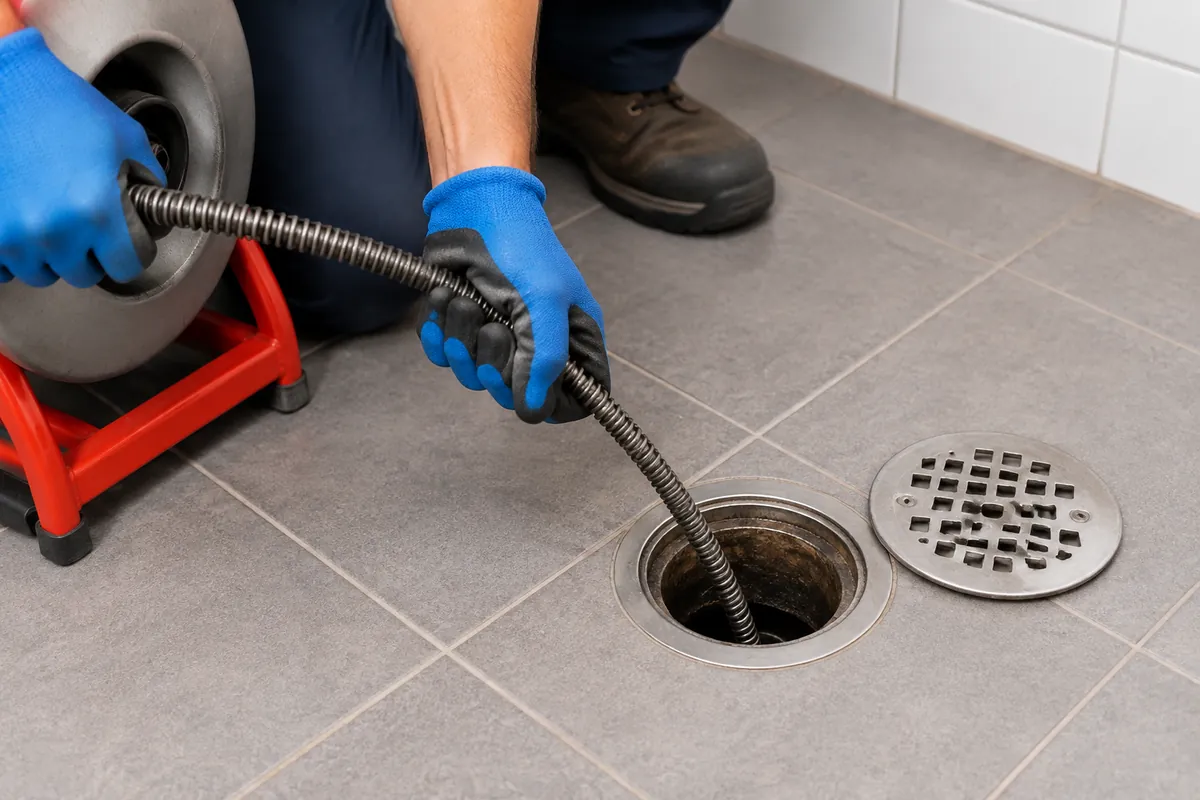
A cable cuts a channel through a blockage. If the cause was a one-time object, that fixes it. If the cause is roots in a joint, grease on the pipe wall or scale in an old cast iron line, the channel closes again and the clog returns.
That is the pattern to watch for. A drain that clears and then slows again within weeks is giving you information. A camera shows the cause, and hydro jetting can clean the pipe wall when the pipe is sound.
What older Reading homes add to the picture
Many houses in the city have drains of cast iron or clay. Cast iron scales from the inside, narrowing the pipe. Clay joints let roots in. Both produce slow drains that get worse over months.
If your house is older and the slow drain is in more than one place, a camera inspection is often the most useful first step. It shows whether the line needs cleaning, repair or replacement.
What to do right now
Stop adding water
Hold off on laundry, dishwashers and long showers until the cause is known.
Check the cleanout
A capped pipe in the basement or yard is the access point. Do not open it if sewage is rising.
Try a plunger on a single fixture
Use a proper plunger and a firm seal. Do not mix chemicals.
Call if it is more than one fixture
Describe what is slow, what gurgles and what smells.
What to tell the plumber on the phone
- Which fixtures are slow and which are fine.
- Whether you hear gurgling, and from which drain.
- Whether the washing machine or a flush makes anything bubble.
- Whether the house has a basement, a crawlspace or a slab.
- How old the house is and whether you know the drain material.
A clear answer to these questions lets the plumber predict whether a cable, a jet or a camera is the right tool. It also helps them bring the right equipment on the first visit.
When a slow drain follows a change in the house
Think about what changed. A new garbage disposal, a recent remodel, a tree that was planted near the line or a heavy rain can each trigger a slow drain. If the slowdown started right after one of these, mention it to the plumber.
A disposal sends more solids into the kitchen line. A remodel can leave debris in the pipes. Roots grow toward moisture, and a joint that was fine for years can suddenly leak enough to attract them.
Habits that keep drains open
- Keep grease out of the kitchen drain. Let it cool, seal it in a container and put it in the trash, as municipal public works guidance advises.
- Use hair strainers in showers and tubs.
- Flush only toilet paper, not wipes, even those labeled flushable.
- Wipe greasy pans with a paper towel before washing and put the grease in the trash.
- Have a main line camera check done every few years in an older house.