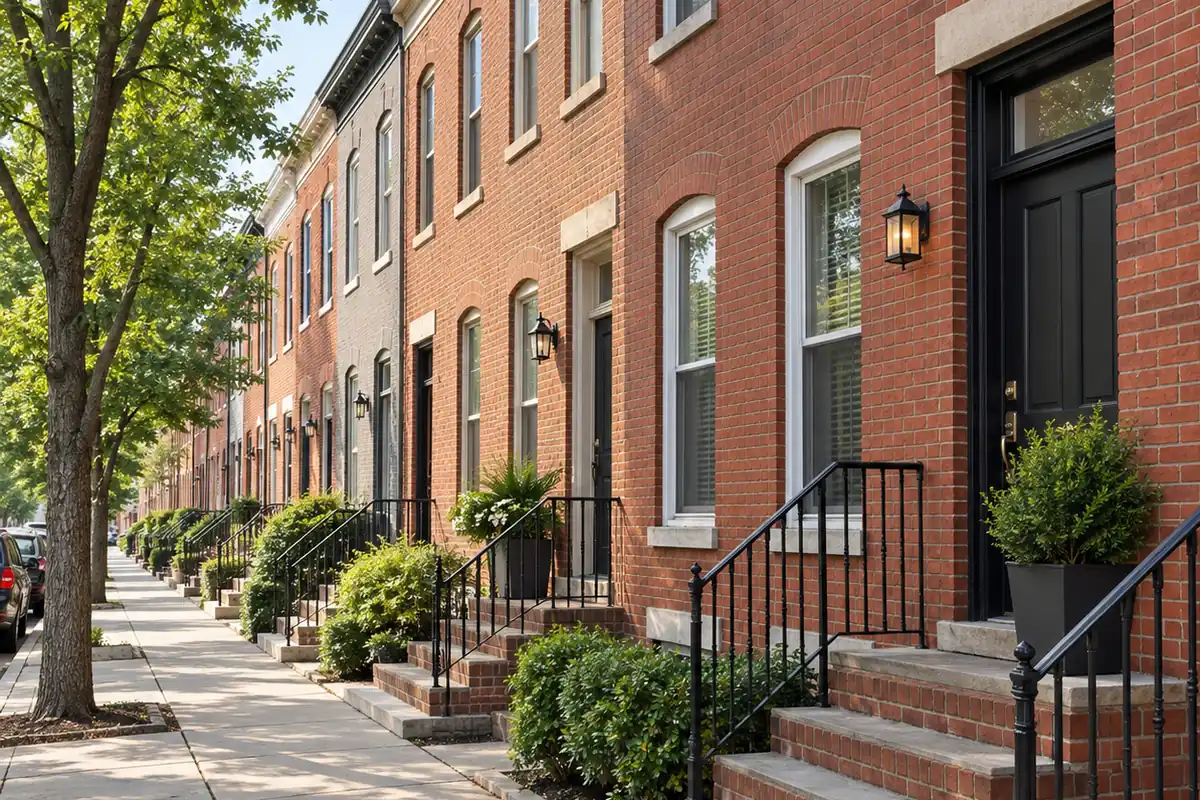
Why older attached homes are different
Reading became a city in 1847. Attached homes sit close together, and the sewer lines serving them often run in tight corridors under the street, the sidewalk or a back alley.
Close spacing makes access harder and repairs more disruptive. It also means that a problem with one line can show up in a neighboring house, depending on how the lines were laid. Those layouts vary from block to block, and the only way to know yours is to look.
What old sewer pipe is made of
| Material | Era it is often found | How it fails |
|---|---|---|
| Clay tile | Older homes, many sections joined with mortar or rubber | Joints open and roots enter |
| Cast iron | Mid-century homes and inside older buildings | Scale builds on the inside and the pipe eventually pits |
| Orangeburg fiber pipe | Mid-twentieth century in some areas | Softens, ovals and can collapse |
| PVC or ABS plastic | Newer replacements | Rarely fails, except where it is broken or sags |
A plumber with a camera can tell which one you have within minutes. That determines what repair options make sense, and which cleaning methods are safe.
The signs, in order of urgency
- A toilet that gurgles when a nearby fixture drains is an early warning.
- A slow drain in several fixtures at once suggests the main line.
- A floor drain bubbling or a smell in the basement means pressure is building.
- Sewage in a tub, shower or floor drain is an emergency.
If sewage is rising, stop using water at once. Every flush and every sink you run adds to what has nowhere to go. See sewer line repair for the steps.
What a camera inspection shows
A camera on a flexible cable runs through the line and records what it sees. Roots, offset joints, cracks, bellies where the pipe sags and scale are all visible. The plumber can note the depth and distance to each problem from the cleanout.
Ask to see the footage. A good plumber will show it and explain what it means, rather than just announcing that the line is bad. If the camera shows only scale or grease, hydro jetting may clear it without any digging.
Cleaning, spot repair or replacement
| What the camera shows | Likely response |
|---|---|
| Grease or scale, pipe sound | Cleaning, with a follow-up check |
| Roots at a joint | Cut the roots and repair or line the joint |
| One cracked or offset section | Spot repair of that section |
| A long sag or widespread damage | Replacement, see sewer line replacement |
Spot repairs make sense when the rest of the line is sound. If failures are spread along the pipe, repeated patches cost more than replacing it once.
Who owns which part of the line
Ownership of the sewer lateral, the pipe that connects a house to the main, varies by municipality and by property. In some places the owner is responsible all the way to the main. In others, the municipality handles the portion in the street.
Ask the borough or city sewer authority where your responsibility ends. Do this before agreeing to a major repair. For a shared line in an attached block, ask the plumber to check which houses connect to it.
Insurance and backups
MoneyGeek notes that a standard homeowners policy does not cover water that comes back through drains, sewers or a sump pit. That requires a water backup endorsement.
Read your policy now. If you have a finished basement in an older home, the endorsement is worth pricing.
A walk through a typical backup call
A plumber starts by asking which fixtures are affected and when it began. They look at the cleanout, then clear the line with a cable or a water jet. Once water is flowing, a camera follows to find what caused the stoppage.
That sequence matters. Clearing without a camera risks sending the stoppage back in a month. Looking without clearing leaves you with a flooded basement. Done together, the call ends with water flowing and an answer.
Backwater valves and basements
A backwater valve is a one-way valve in the sewer line that closes when water tries to flow backward. It can stop sewage from entering a basement when the main sewer is overloaded. It needs to be accessible and cleaned so debris does not hold it open.
Whether one makes sense depends on the home, the plumbing layout and local rules. A plumber can say whether your basement fixtures are lower than the street and whether the valve is practical.
Questions to settle before a repair
In an attached house, find out where your sewer line leaves the building and where the cleanout sits. A camera can show the route, which matters when neighboring houses are close together and a backup in one basement may involve a shared stretch of pipe.
Ask the water and sewer authority which part of the line you are responsible for before any repair starts. The answer differs from place to place, and it decides who pays for work near the street.
Reducing the chance of a repeat
- Keep wipes, paper towels and grease out of drains.
- Know where your cleanout is and keep it accessible.
- Avoid planting trees over the sewer line.
- Have the line checked with a camera if backups repeat.
- Consider a backwater valve if the plumber recommends one for your basement.