The steps, in order
Leave
Get everyone, including pets, out of the building. If you are outside, move away from the area.
Do not create a spark
The Pennsylvania PUC says not to turn lights on or off and not to make calls from a landline or cell phone while at home.
Leave doors and windows open if it costs no time
Ventilation helps, but never delay your exit to do it.
Call from a safe distance
The PUC says to call 9-1-1 and your natural gas utility from away from the odor. In the Reading area the gas utility is generally UGI Utilities, which lists (800) 276-2722 for gas emergencies. Confirm the name and number on your gas bill.
Wait
Stay out until the utility or emergency personnel confirm it is safe to return.
Why the smell exists
Natural gas has no odor on its own. Utilities add a chemical with a strong smell that most people describe as rotten eggs, so that a leak is noticeable. The smell is a warning that was added on purpose.
Some people have a weaker sense of smell, and some leaks are in places where the smell does not travel. If a hissing sound, dead vegetation over a buried line or a physical symptom such as headache and dizziness accompanies a faint smell, treat it as a leak.
What not to do
- Do not flip light switches or use appliances.
- Do not light a match, candle or lighter.
- Do not use a landline or cell phone inside the building.
- Do not start a car in an attached garage.
- Do not try to find the leak yourself.
Any spark can ignite gas that has built up. A phone call from outside costs nothing.
Who handles the repair after the scare
In most cases the gas utility owns the line up to the meter and can shut off service if there is a leak. The piping inside the house, from the meter to each appliance, belongs to the owner, and a plumber repairs it. See gas line repair for how that division works.
If the utility shut off service, it will tell you what has to be fixed before gas is restored. A plumber can make the repair and have the line pressure tested.
Smells that are sometimes mistaken for gas
| Smell | Possible cause | What to do |
|---|---|---|
| Rotten egg | Natural gas, or sewer gas from a dry trap | Treat as gas first |
| Sulfur only when hot water runs | Bacteria in the water heater | A plumber can check the tank. See water heater repair |
| Sewer smell near a floor drain | A dry trap that has lost its water seal | Run water in the drain. See drain cleaning |
| Burning or metallic smell near the furnace | Dust or an appliance problem | Call an HVAC technician |
If you are not certain which one it is, leave and let the utility decide. A false alarm costs a few minutes. A real leak ignored costs far more.
Carbon monoxide is a different danger
Carbon monoxide is a gas produced by incomplete burning. It has no smell, and it is not the same as natural gas. A carbon monoxide alarm detects it. A gas leak detector detects natural gas.
Both alarms are worth having in a home with gas appliances, but neither replaces leaving the house when you smell gas. If a carbon monoxide alarm sounds, get outside and call 911.
Appliances that use gas in a typical house
Gas reaches a house through one meter and splits into several branches. Common appliances include the furnace or boiler, the water heater, the kitchen range and the clothes dryer. Fireplaces, grills and generators can also be on the same system.
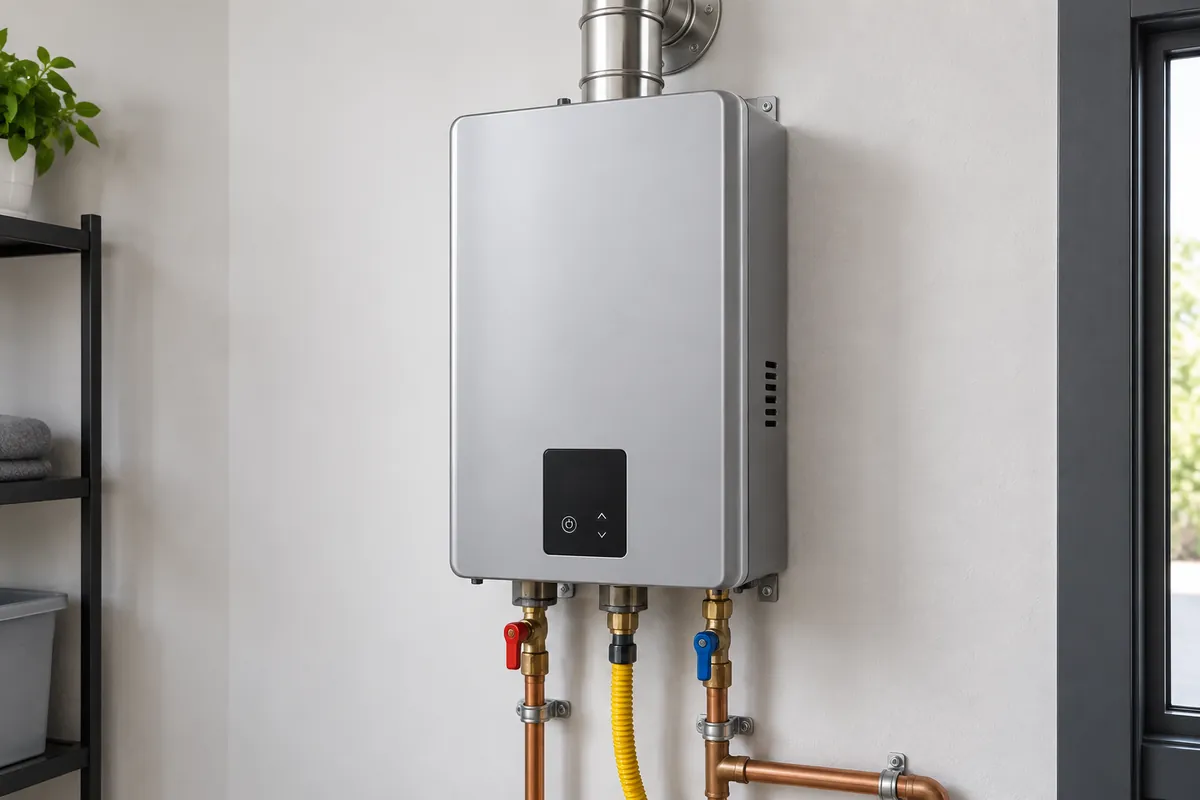
Each appliance has its own shutoff valve, usually a handle in the gas pipe within a few feet. A handle in line with the pipe is open, and a handle across the pipe is closed. Knowing where these are helps a plumber work quickly and helps you shut off a single appliance if the utility says it is safe.
Do not use any of these valves to try to stop a major leak. Leave and call. The valves are for service and for planned work.
What a plumber checks after the utility clears the house
Inspect visible piping
Corrosion, loose fittings and damaged connectors are the first things to look for.
Test joints
A leak detection solution or an electronic detector shows where gas escapes.
Pressure test
The line is pressurized and watched. A drop means a leak somewhere.
Repair and retest
The faulty part is replaced and the line is tested again before gas is restored.
A good plumber explains which joint failed and what was done. Ask for a short written note, especially if the utility needs proof that the repair is complete.
Why a faint smell still counts
Utilities add an odorant to natural gas so that a leak can be noticed. People also get used to a smell after a few minutes indoors, so a faint odor that seems to fade is not proof that the problem has passed.
A gas detector can add a warning, but it does not replace leaving the house. If you smell gas, treat it as real, get everyone out and call from a safe distance. The utility can check with instruments that a nose cannot match.
Preventing the next scare
- Have gas appliances serviced on a regular schedule.
- Replace old flexible appliance connectors when an appliance is moved or replaced.
- Know where the gas shutoff valve is at each appliance and at the meter.
- Keep the area around the meter and the water heater clear.
- Install smoke and carbon monoxide alarms and test them monthly.